
Hallucination
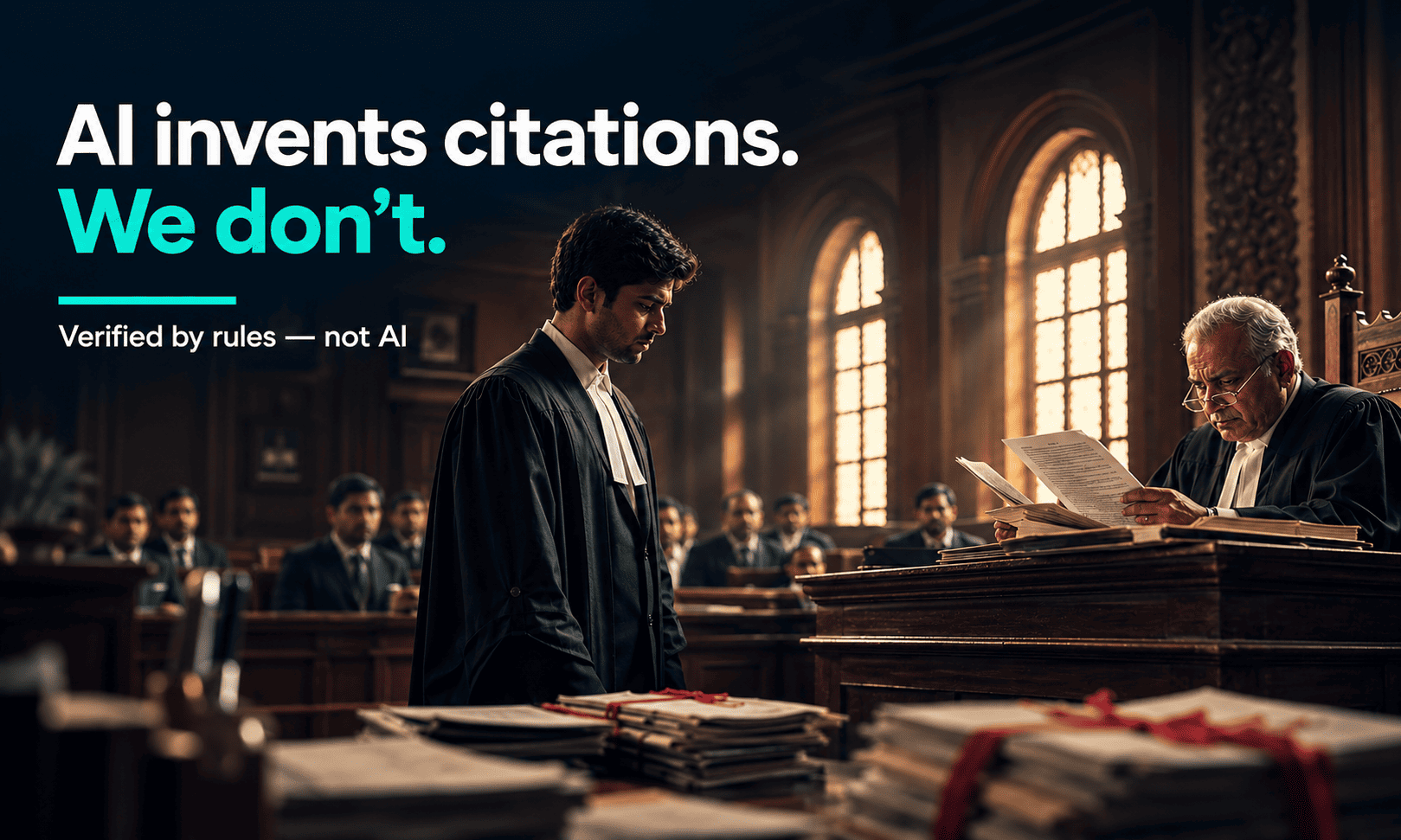
AI invents citations.
We don't.
Judges are already rejecting filings with citations that don't exist — the direct fallout of lawyers trusting generic AI with case law. In litigation, a fabricated citation isn't an inconvenience. It's professional risk in open court. Here's exactly how LexEdge is built to not let that happen.
This is already happening in real courtrooms.
Generic AI tools are language models predicting plausible-sounding text — including case citations. Here’s what that actually costs a litigator.
Fabricated citations reach real filings
Generic AI invents case law that sounds completely real. Without a separate verification step, a fabricated citation can make it from a draft straight into a document you file.
You don't get a second chance in court
A citation that doesn't exist, caught by a judge, doesn't just get corrected — it can sink the filing and your credibility with it. This is the single most differentiated fear in legal AI adoption right now.
Most tools can't tell you when they're guessing
Confidence and correctness are not the same thing. A model that sounds certain regardless of whether it actually verified anything leaves the entire checking burden on you.
This is solvable — but only if verification happens by rule, not by AI. Here's exactly how LexEdge does it.
See how it's solved ↓Every citation is checked before it ever reaches your draft.
Not a promise — a mechanism. Here’s what actually happens behind the scenes.
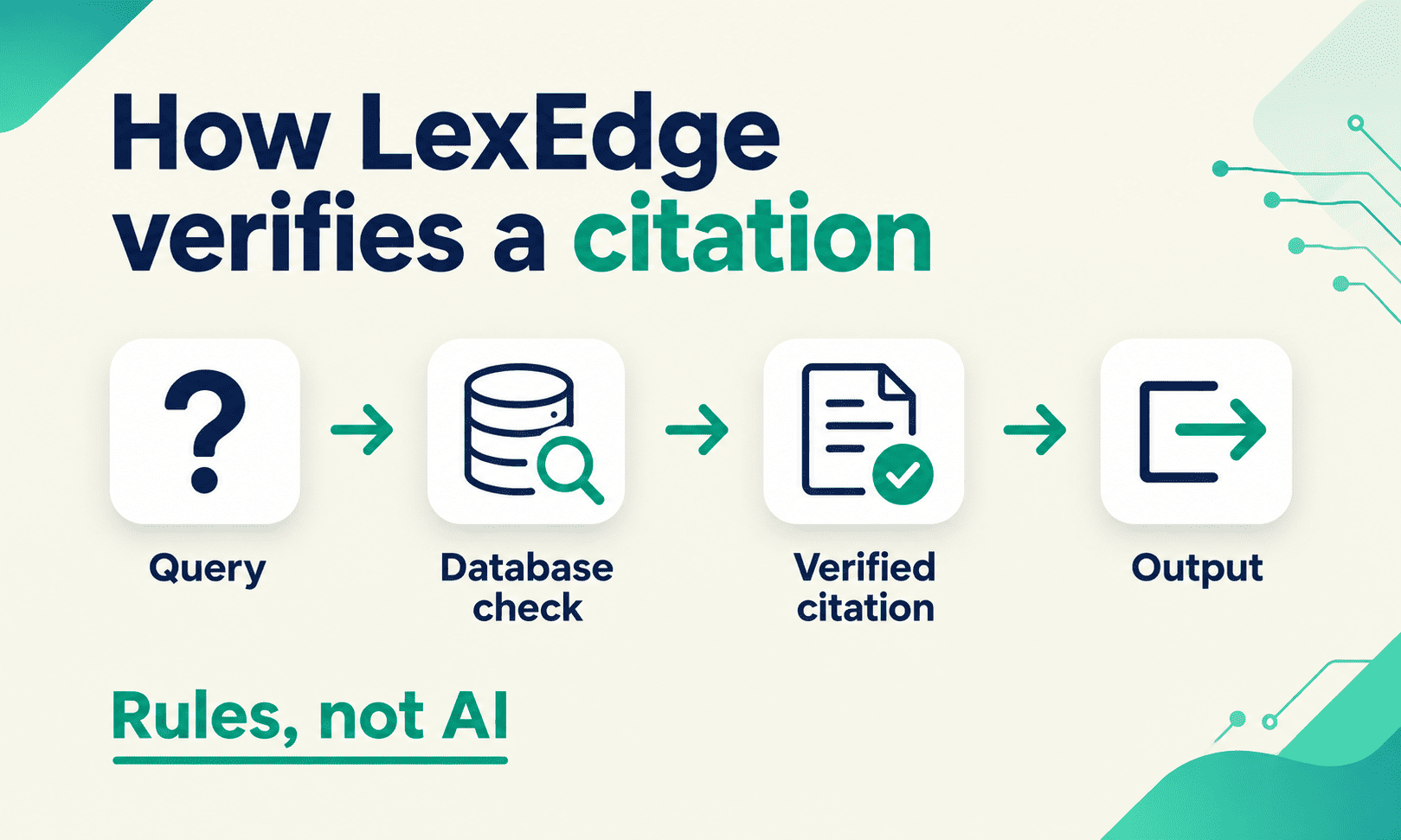
Query → Database check → Verified → Output.
Your query hits a deterministic check against official case-law databases — the model only explains what verification already found. It never generates a citation from prediction alone.
If it can't be confirmed, it's flagged — not shown.
Anything that can't be verified against an official source is flagged before it leaves the system, rather than presented as a confident answer. Refusal, not guesswork, is the default.
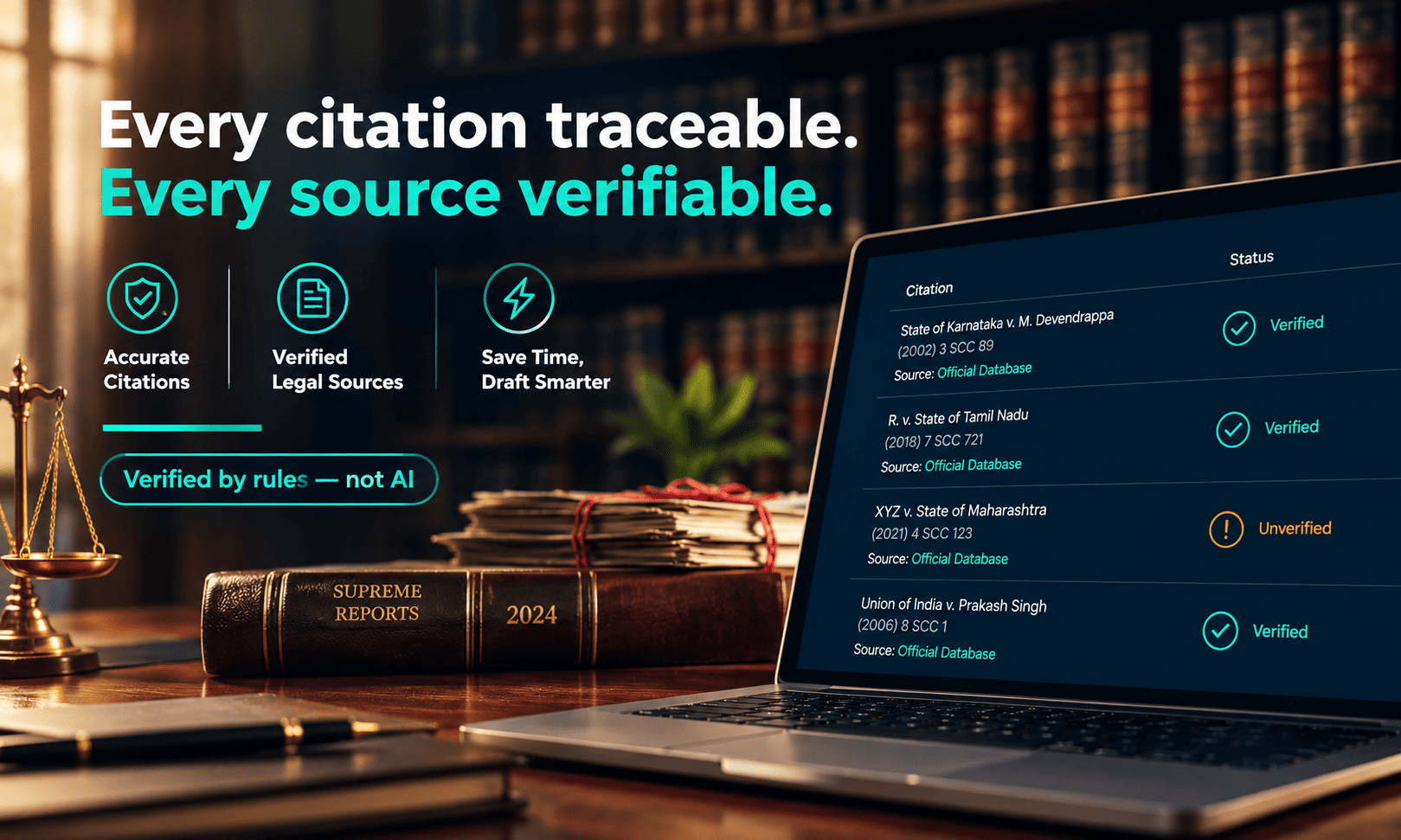
Every citation traceable. Every source verifiable.
Trust isn't a claim — it's a trail. Every case-law reference ties back to a real, checkable source in an official database. The AI explains; the rules decide.
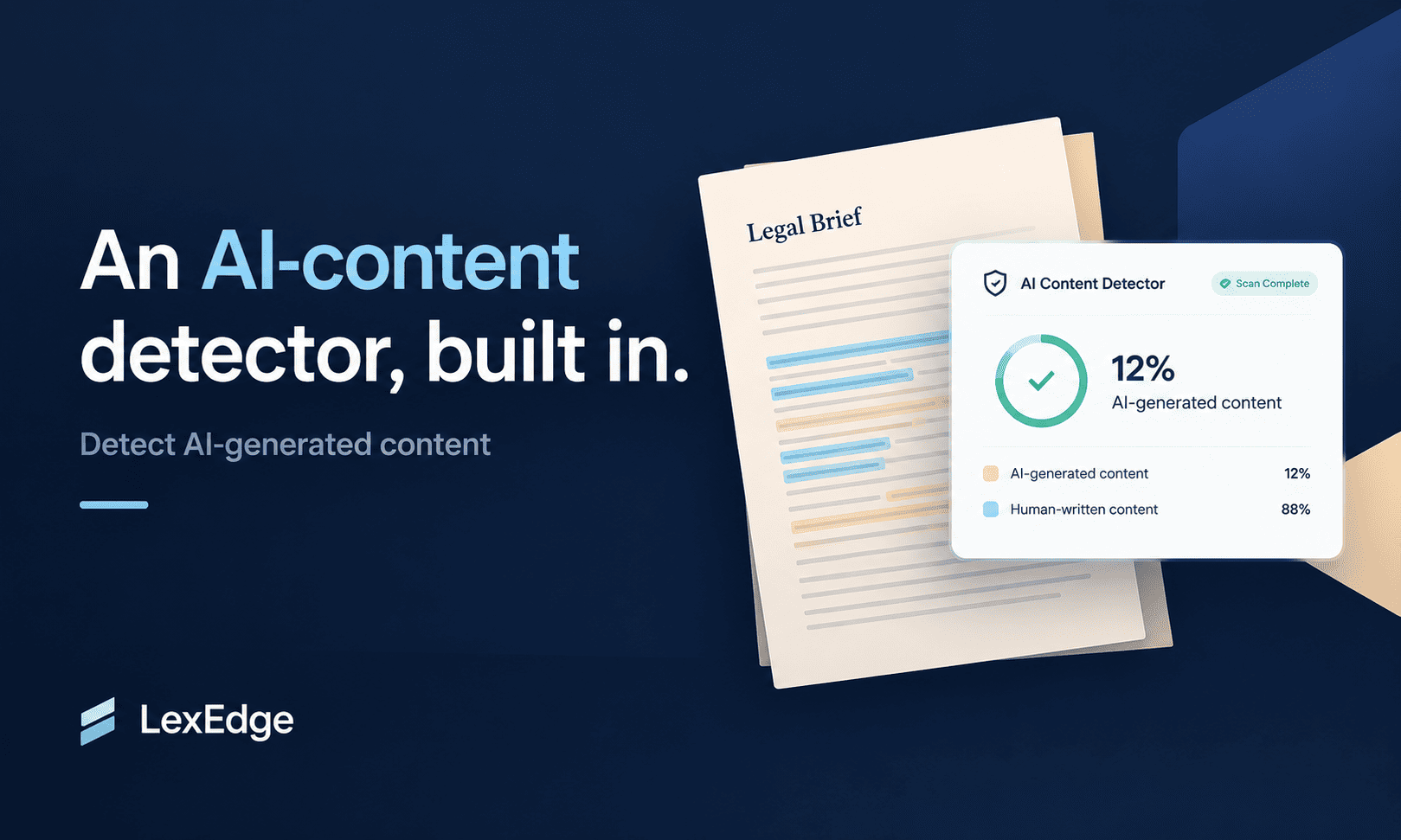
An AI-content detector, built in.
LexEdge also includes a tool that detects whether a document or draft — yours or someone else's — was created using AI, so questionable work can be caught before it moves forward, not after.
Check this before you let any AI tool near a citation.
Not specific to LexEdge — use it on whatever you’re evaluating, including this. Click each item as you check it off.
Does it check citations against a real database, or just generate them?
"Trained on legal data" is not the same as "verified against an official source." Ask which one you're getting.
Is verification deterministic, or is it "AI checking AI"?
Asking a model to double-check itself doesn't solve hallucination — it just adds another layer of guessing. Rules-based verification is a structurally different claim.
What happens when it can't verify something?
Does it flag the gap honestly, or does it still hand you a confident-sounding answer? That difference is the whole risk.
Can you trace every citation back to its source?
A real source link, not just a claim of accuracy — you should be able to check it yourself in seconds.
Has this actually been tested on a real filing, by you?
Not a demo, not a sales call — your own draft, your own citations, checked before you rely on it in front of a judge.
If LexEdge meets every item on this list, test it on your next draft.
Don’t take our word for it — put it against your own work. All modules free, no credit card, export any time. Draft as usual, and let LexEdge verify every citation against official databases.
Start free — test it on your next draftStill cautious about AI and citations? Good. Ask these.
How exactly does citation verification work — is it "AI-verified"?
No — that phrase is one we deliberately avoid. Verification is rules and algorithm-based: every citation is cross-checked against official case-law databases deterministically. The AI explains what verification found; it doesn't decide what's true.
What happens if LexEdge can't verify a citation?
It's flagged before it leaves the system, rather than shown as a confident answer. You see that something couldn't be confirmed, not a plausible-sounding guess.
What if the citation is real but just hard to find?
The check is against official databases, not a fixed internal list — genuinely obscure but real citations are still verifiable by the same process. What gets flagged is anything that can't be confirmed against a real source, which is the actual risk this exists to catch.
Can I check this against a filing I already trust, to compare?
Yes — that's the intended way to evaluate it. Run one of your own recent drafts through it and see what it confirms and what it flags, rather than taking a claim about accuracy at face value.
Does this replace my own review of the citations?
No — nothing leaves without your sign-off. LexEdge prepares and verifies; you still review before anything is filed. It reduces the risk of a fabricated citation slipping through, it doesn't remove your judgment from the process.
What's the AI-content detection tool for?
It checks whether a document or draft — yours or someone else's — was created using AI, so work that skipped proper verification can be caught before it moves forward rather than after it's already relied on.
What's the catch?
Fair question on a page about trust. Onboarding still has friction we're actively improving, and we'd rather say that plainly than oversell a polished first impression. Test the verification claim specifically against your own draft — that's a more honest evaluation than anything written here.
AI invents citations. We don't. Test it yourself.
Start with the free plan — every module, no card, no obligation to keep going.